
Regenerative Orthopedic Medicine & OrthoBiologics
Regenerative Orthopedic Medicine & OrthoBiologics
What Are OrthoBiologics?
Regenerative Therapies
Conditions Commonly Treated
Why Patients Choose Regenerative Orthopedic Care
Insurance and FDA
Candidate Evaluation
Our Treatment Philosophy
Regenerative Medicine
What We Offer
About Orthobiologics & Regenerative Ortho Medicine
Conditions Treated With Orthobiologics
FAQs
Helping the Body Heal Naturally Without Surgery or Long-Term Medications
At Tazewell Orthopaedic & Arthritis Clinic (TOAC), we offer advanced regenerative orthopedic treatments designed to help patients restore mobility, reduce pain, and support the healing of joints, tendons, ligaments, and other musculoskeletal tissues. These therapies use biologic materials — often derived from your own body — to stimulate repair where traditional treatments may fall short. Our clinic focuses on non-surgical solutions that support healing rather than simply masking pain. Many patients choose regenerative therapies to delay or avoid surgery, reduce reliance on chronic steroids or pain medications, and return to daily activities with greater comfort and mobility.
What Are OrthoBiologics?
OrthoBiologics refers to biological substances that encourage tissue repair and regeneration. When applied to damaged or degenerative musculoskeletal structures, they may:
- Reduce inflammation
- Improve joint function
- Support cartilage and tissue healing
- Enhance recovery after injury
- Reduce pain without surgery
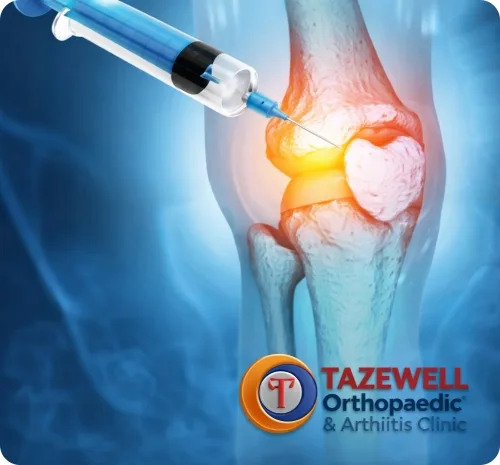
Regenerative Therapies Offered at TOAC
We offer several evidence-based OrthoBiologic therapies, including:
Platelet-Rich Plasma (PRP)
PRP uses a high concentration of your own blood platelets rich in natural growth factors — to stimulate tissue repair and reduce inflammation in joints, tendons, and ligaments.
Micro-Fragmented Adipose Tissue (mFAT)
This therapy utilizes regenerative cells within fat tissue to support soft-tissue healing and joint repair. These are often described in lay terms as “stem cell” therapies.
Bone Marrow Aspirate Concentrate (BMAC)
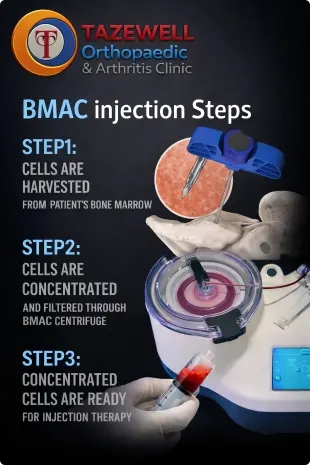
BMAC contains regenerative cells and growth factors derived from bone marrow and may support healing in cartilage injuries, ligament injuries, and degenerative joint conditions.
Conditions Commonly Treated
Patients seek regenerative orthopedic care for:
Osteoarthritis (knee, hip, shoulder, ankle, and spine- related joints)
Overuse injuries & sports- related musculoskeletal conditions
Tendon and ligament injuries (Achilles, elbow, ankle, knee)
Cartilage loss or degeneration
Chronic joint pain
Rotator cuff and shoulder injuries
Why Patients Choose Regenerative Orthopedic Care
Many patients pursue OrthoBiologic treatments because they are:
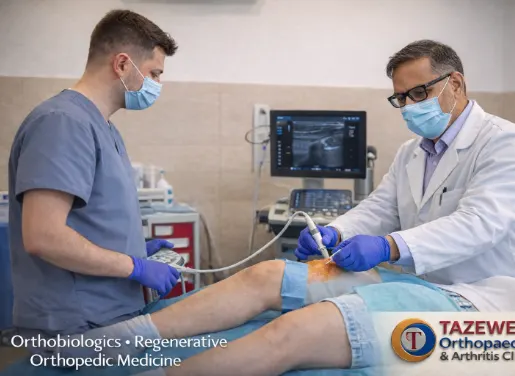
- Minimally invasive
- Derived from their own body (autologous)
- Focused on healing the root cause rather than masking symptoms
- Supportive of mobility, function, and long-term joint health
These therapies offer a unique option for patients not yet ready for surgery, or those hoping to avoid it altogether.
Insurance, FDA, and Research Status Transparency for Patients
We believe clarity and honesty are essential. Patients should understand:
Insurance Coverage
Most regenerative orthopedic therapies are not covered by insurance. These treatments are generally self-pay.
Insurance Coverage
Most regenerative orthopedic therapies are not covered by insurance. These treatments are generally self-pay.
Candidate Evaluation
Not all patients or conditions are suitable for regenerative therapy. Our qualified medical providers perform a thorough evaluation to determine if these treatments are appropriate based on:
Condition severity
Anatomy and imaging
Functional goals
Health status
Activity level
Our Treatment Philosophy
At TOAC, our mission is to: Restore Motion. Renew Life.™
We focus on helping patients move better with less pain — without unnecessary surgery or long-term medication dependence whenever possible.
Next Steps
To see if you’re a candidate, patients can request:
423-491-7444
Phone consultation for general information
1830 Main St. Tazewell, TN 37879
In-clinic evaluation
Regenerative Medicine in Orthopedics and Pain Management / OrthoBiologics
OrthoBiologics is an expanding field within regenerative orthopedic medicine focused on using biologic materials from the patient’s own body to assist with healing and tissue repair. At Tazewell Orthopaedic & Arthritis Clinic in the Tri-State Tennessee–Kentucky–Virginia region, these therapies are utilized to support recovery from joint degeneration, tendon and ligament injuries, and other musculoskeletal conditions without immediately resorting to surgery. Treatments such as platelet-rich plasma (PRP), micro-fragmented adipose cellular therapy, and bone marrow–derived biologic injections aim to activate the body’s natural reparative mechanisms, reduce pain, and improve function. These autologous regenerative therapies are ethically distinct from embryonic stem cell products, which are allogenic, donor-derived, and not used in our clinic. By leveraging the patient’s own biologic materials, OrthoBiologics offers a natural and personalized approach for individuals seeking non-surgical orthopedic care and functional restoration.
What We Offer With OrthoBiologic & Regenerative Orthopedic Care
At Tazewell Orthopaedic & Arthritis Clinic, patients receive personalized, non-surgical orthopedic care supported by a collaborative team that includes our fellowship-trained orthopedic surgeon, qualified medical providers, and musculoskeletal specialists committed to restoring movement and reducing pain. Unlike high-volume procedural clinics, our evaluations, imaging, and regenerative treatments are designed around the individual patient to maximize functional outcomes and quality of life.
Coordinated Orthopedic & Pain-Focused Care
Patients are evaluated and treated through a coordinated model involving orthopedic surgery, sports-related injury care, pain management strategies, and post-procedure optimization — providing a comprehensive treatment plan for joint pain, arthritis, tendon and ligament injuries, and other musculoskeletal disorders.
Evidence-Guided Regenerative Treatment Options
We stay current with evolving orthopedic and regenerative medicine research to responsibly offer therapies such as PRP, micro-fragmented adipose cellular therapy, and bone marrow–derived biologic injections for patients seeking minimally invasive solutions outside of joint replacement or chronic medication use.
Experienced Orthopedic Leadership
Our orthopedic surgeon brings more than 40 years of combined orthopedic and musculoskeletal experience across our clinic, providing patients in Tazewell, Claiborne County, and the Tri-State Tennessee–Kentucky–Virginia region access to specialized regenerative care without having to travel to major metro academic centers.
Personalized Second Opinions & Treatment Counseling
We offer second-opinion consultations for patients exploring alternatives to surgery, steroid injections, or chronic pain management — including regenerative options for sports injuries, osteoarthritis, tendon and ligament disorders, and spine-related joint conditions.
Patient-Centered Philosophy
Our philosophy is simple: healing should be supported from within using the patient’s own biologic materials whenever possible — rather than relying on donor or embryonic sources. We do not use embryonic stem cell products; instead, our therapies use a patient’s own living, intelligent cells, which is both ethically aligned and biologically advantageous.
About Orthobiologics & Regenerative Ortho Medicine
Orthobiologics is a specialized area within regenerative orthopedic medicine that uses biologic materials from the body to support healing and recovery in muscles, bones, joints, tendons, ligaments, and cartilage. These therapies work with the body’s own repair mechanisms and are often considered by patients seeking non-surgical options for arthritis, overuse injuries, sports injuries, tendon and ligament injuries, and chronic pain.
At Tazewell Orthopaedic & Arthritis Clinic, our regenerative treatments focus primarily on autologous sources, meaning the biologic materials come from the patient’s own body rather than donor sources. The most commonly used orthopedic biologic sources include
Platelet-Rich Plasma (PRP)
derived from blood
Bone Marrow Aspirate Concentrate (BMAC)
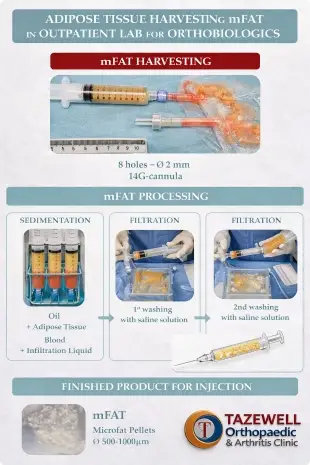
Micro-Fragmented Adipose Tissue (mFAT)
Micro-Fragmented Adipose Tissue (mFAT)
adipose (fat) derived cellular preparation
When these biologic components are precisely injected — often under ultrasound guidance — into affected joints or soft tissue structures, they may help reduce inflammation, promote tissue repair, and support improvements in pain, function, and mobility.
Many patients refer to these regenerative cells as “stem cells” for simplicity, although the scientific terminology more accurately describes them as stromal or regenerative cells. Importantly, our clinic only provides autologous regenerative therapies, which are ethically and biologically distinct from embryonic stem cells. Embryonic stem cells are allogenic (donor-derived), associated with ethical controversy, and not used in orthopedic regenerative care due to regulatory limitations and inferior compatibility for orthopedic applications. We do not use embryonic stem cells or donor-derived embryonic stem cell products at our clinic.
Orthobiologics can be helpful for patients trying to delay or avoid surgery, for individuals who are not ideal surgical candidates, and for those with persistent pain despite traditional conservative orthopedic care. These therapies may be used alone or in combination with physical therapy, bracing, interventional pain procedures, or surgical care when appropriate.
Our regenerative medicine services are provided by our orthopedic surgeon and qualified medical providers, offering patients in Tazewell, Claiborne County, and the Tri-State Tennessee–Kentucky–Virginia region access to modern regenerative orthopedic options close to home — without needing to travel to distant academic centers. Disclosure & Regulatory Information.
Orthobiologic therapies are considered investigational by regulatory authorities and are generally not covered by insurance, making them self-pay procedures. While the procedure kits and processing devices used in these treatments may be FDA-cleared, the regenerative procedures themselves are not FDA-approved for specific orthopedic indications at this time. Individual patient results vary, and candidacy should be evaluated by a qualified medical provider.
Conditions Treated With Orthobiologics & Regenerative Orthopedic Medicine
At Tazewell Orthopaedic & Arthritis Clinic, we provide regenerative orthopedic solutions for patients seeking non-surgical treatment options for joint pain, musculoskeletal injuries, and degenerative conditions. Orthobiologic therapies use biologic materials from the patient’s own body — such as Platelet-Rich Plasma (PRP), Bone Marrow Aspirate Concentrate (BMAC), and Micro-Fragmented Adipose Tissue (mFAT) — to support the body’s natural repair mechanisms. Many patients refer to these regenerative cells as “stem cells”, and while that term is used commonly for convenience and search purposes, it is important to note that our clinic utilizes autologous, orthopedic-appropriate regenerative cells, not embryonic stem cells, which are donor-derived and ethically controversial. Autologous biologics are superior for orthopedic use because they are natural to the patient, immunologically compatible, and directly targeted to musculoskeletal repair.
Conditions Treated With Orthobiologics & Regenerative Orthopedic Medicine
Orthobiologic therapy provides a promising option for patients with knee, hip, shoulder, ankle, or spine-related osteoarthritis. By injecting regenerative biologic agents into affected joints, our goal is to reduce inflammation, decrease pain, and support cartilage health, helping patients prolong joint function and delay or avoid the need for surgery. This is particularly beneficial for patients in Tazewell, Claiborne County, and the Tri-State Tennessee–Kentucky–Virginia region who prefer conservative orthopedic care close to home.
Conditions Treated With Orthobiologics & Regenerative Orthopedic Medicine
Orthobiologic therapy provides a promising option for patients with knee, hip, shoulder, ankle, or spine-related osteoarthritis. By injecting regenerative biologic agents into affected joints, our goal is to reduce inflammation, decrease pain, and support cartilage health, helping patients prolong joint function and delay or avoid the need for surgery. This is particularly beneficial for patients in Tazewell, Claiborne County, and the Tri-State Tennessee–Kentucky–Virginia region who prefer conservative orthopedic care close to home.
Cartilage Loss & Cartilage Defects
Cartilage damage from injury or wear-and-tear can impair mobility and joint function. Regenerative injections and biologic techniques can help support the joint environment and may aid in cartilage preservation. Our autologous “stem cell”–rich therapies differ from embryonic stem cell products, which are not used in orthopedic practice due to regulatory constraints, donor-derived risks, and limited musculoskeletal specificity.
Muscle Strains & Soft Tissue Injuries
Muscle strains, tears, and chronic soft tissue injuries may benefit from PRP or cellular biologic injections, which aim to reduce inflammation and promote tissue healing. This is especially relevant for patients recovering from work-related injuries, sports injuries, or repetitive strain conditions.
Bone Healing, Fractures & Non-Unions
Orthobiologics may also play a supportive role in bone healing for select fractures or cases of non-union (fractures that struggle to heal). By introducing growth-factor-rich biologic materials, the goal is to stimulate bone repair and reduce the need for more extensive orthopedic procedures.
FAQs
Orthobiologics at Tazewell Orthopaedic & Arthritis Clinic (TOAC)
What are orthobiologics?
Orthobiologics are treatments that use your body’s own healing substances—such as blood, bone marrow, or fat tissue—in concentrated form to support repair of joints, tendons, ligaments, and muscles. At TOAC we focus on autologous options (from your own body), not donor “stem cell” products.
What problems can orthobiologics help with?
Orthobiologic therapies may be considered for:
- Early to moderate osteoarthritis (knee, hip, shoulder, ankle, etc.)
- Tendon or ligament problems (tennis elbow, golfer’s elbow, rotator cuff, Achilles, plantar fascia, etc.)
- Chronic joint or soft-tissue pain that has not improved with rest, therapy, bracing, or standard injections
- Patients looking to delay or avoid major surgery when appropriate
These treatments are not first-line care. We recommend them after a thorough evaluation and discussion of all options.
How do orthobiologics work?
Your blood, marrow, and fat contain cells and growth factors that help drive the body’s natural repair process. When these are concentrated and placed precisely into a painful or damaged area, they may:
- Decrease inflammation
- Support tissue repair and remodeling
- Improve pain and function over time
Results vary from person to person, and no orthobiologic treatment can be guaranteed.
What types of orthobiologic treatments are offered at TOAC?
Depending on your condition and medical history, your TOAC provider may recommend:
- Platelet-Rich Plasma (PRP) – a concentrated portion of your own blood rich in growth factors
- Bone Marrow Aspirate Concentrate (BMAC) – concentrated cells and growth factors from your hip bone marrow
- Microfragmented Adipose Tissue (MFAT) – carefully processed fat from your abdomen or thigh containing reparative cells and matrix
- Viscosupplementation and other joint-preserving options when appropriate
All injections are performed with ultrasound and/or X-ray guidance for precision.Shape
Who is a good candidate for orthobiologic therapy?
You may be a candidate if you:
- Have joint or soft-tissue pain that limits work, sports, or daily life
- Have tried conservative care (activity changes, medications, physical therapy, bracing, cortisone) without lasting relief
- Want to explore less invasive options before joint replacement or major surgery
You may not be a candidate if you have uncontrolled infection, certain cancers, severe blood disorders, or are unable to safely stop specific medications. Your TOAC physician will review your individual situation.Shape
What happens on the day of my procedure?
- You arrive to our clinic, review consent, and meet with your provider.
- Blood, bone marrow, or fat is drawn and processed in a sterile system.
- The concentrated material is injected directly into the target area using ultrasound or fluoroscopy guidance.
- Most procedures are completed in under 1–2 hours and you walk out the same day.Shape
How painful is the procedure?
Most patients describe the procedure as similar to a standard injection or blood draw:
- Local anesthetic and/or nerve blocks are used to improve comfort.
- Soreness or pressure during and after the injection is common and usually short-lived.
- Discomfort at the harvest site (hip or abdomen) can occur with BMAC or MFAT and typically improves over several days.Shape
What is the recovery like?
Recovery depends on the specific treatment and the area treated, but in general:
- Same day: You typically walk out of the clinic. Driving restrictions depend on sedation and the body part treated.
- First few days: Expect soreness, stiffness, and mild swelling as part of the healing response.
- Activity: Light daily activities are usually allowed right away; high-impact or heavy lifting is restricted for weeks.
- Rehab: A guided physical therapy program is often started after a short healing period to protect and strengthen the area.
Your provider will give you a personalized activity plan.Shape
When will I start to feel better and how long can results last?
- Many patients notice gradual improvement between 2–12 weeks after treatment.
- Healing and remodeling may continue for several months.
- Relief, when successful, can last months to years, especially in earlier-stage arthritis or soft-tissue problems.
Response is individual; some patients need additional treatments or ultimately still require surgery.Shape
What are the risks and side effects?
Orthobiologic procedures are generally well-tolerated, but all medical procedures carry risk. Possible issues include:
- Temporary soreness, swelling, or bruising at injection or harvest sites
- Stiffness or a “flare” of pain for several days
- Rare but serious complications such as infection, bleeding, nerve or vessel injury, or blood clots
Your TOAC team uses image guidance, sterile technique, and detailed screening to help reduce risk.